
“For if you forgive men their trespasses, your heavenly Father will also forgive you: But if you forgive not men their trespasses, neither will your Heavenly Father forgive your trespasses,” (Matt 6:14-15)
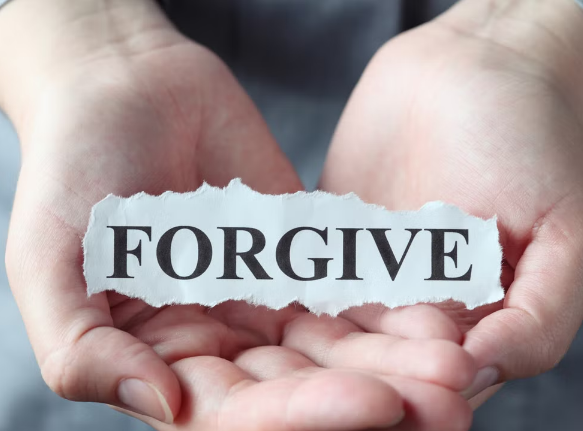
What does it mean to forgive? The English Dictionary defines the word “forgive” Thus: to stop feeling anger towards (someone who has done something wrong): to stop blaming (someone). To stop feeling anger about (something): to forgive someone for (some wrong done to you). To cease to feel resentment against (an offender). To give up resentment of, or claim to requital for.”
RECEIVING FORGIVENESS
Everyone of us wants our sins to be forgiven by our heavenly Father. But from the opening text above, it is very clear that many who pray to Yahweh, for the forgiveness of their sins have not received the forgiveness they are asking for, neither can they ever do so.
Now, if they have not and cannot receive the forgiveness of their sins; . in order words their sins have not been forgiven what is their position. Certainly they are guilty before Yahweh. They are as condemned as the sinners. This is because the Word of Yahweh cannot lie. He says, “if you forgive not men their trespasses, neither will your heavenly Father forgive your trespasses” Then, if your sins are not forgiven due to your failure to forgive other their own sins or offences against you – you have lost your righteousness. If your sins are not forgiven, you are guilty, you are condemned! You have lost your right standing or righteousness before Yahweh
Why? The reason is that righteousness is a state where a person’s sins have been forgiven. The reason a person can be righteous on earth is not because he didn’t commit any sin, but because his sins have been forgiven.
But, for a person’s sins to be forgiven, there is a condition he must meet “For if ye forgive men their trespasses, your heavenly Father will also forgive you: But if you forgive not men their trespasses, neither will your Father (in heaven) forgive your trespasses,” (Matt 6:14-15).
A person must forgive others before his sins will be forgiven. It is a condition that must be met before a person’s sins can be forgiven. If a person forgives others his own sins will be forgiven. But if he refuses to forgive others, his own sins will not be forgiven. Whenever any person repents, confesses his sins to Yahweh and accepts Yahshua the Messiah as his personal Saviour who redeemed him and paid for his sins, he is counted righteous by faith- according to the Scriptures (Rom 5:1) But he also can equally loose this his righteousness. When he refuses to forgive others or any one that offends him. In this way, non-forgiveness makes someone loose his righteousness. Satan knows that he has no power over any righteous person. He also knows that if a righteous person commits sin, his sins will be forgiven: but if he fails to forgive others, his sins will not be forgiven and he will loose his righteousness
FORGIVENESS REMOVES EMOTIONAL SCARS
“I can forgive, but cannot forget,” is only another way of saying, 1 will not forgive,” said Henry Ward Bencher. “Forgiveness ought to be like a cancelled note-torn into two, and burnt up, so that it never can be shown against one.” Forgiveness which is partial, or half-hearted, works no better than a partially completed surgical operation. Pretended forgiveness, which is entered into as a duty, is no more effective than a stimulated facial surgery.
FORGIVENESS IS THERAPEUTIC
Your forgiveness should be forgotten, as well as the wrong which was forgiven. Forgiveness which is remembered and dwelt upon re-infects the wound you are attempting to deaden. On the other hand, “forgiveness”, which is real, genuine, complete and forgotten, is like the scalpel which can remove the pus from the old emotional wounds, heal them and eliminate scar tissue.
Forgiveness is curative when it is genuine, real and complete. It has healing power, emotionally, psychologically-even physiologically. Therapeutic forgiveness cuts out, eradicates, cancels and makes the wrong as if it had never been. Genuine or true forgiveness works like surgery. In facial surgery there can be no partial, tentative or half way measures. The scar tissue is cut out, COMPLETELY AND ENTIRELY! The wound is allowed to heal clearly. Care is taken to see that the face will be RESTORED in every particular, just as it was before injury and just as if the injury had never been.
SENSE OF CONDEMNATION
Therapeutic and whole-hearted forgiveness is not difficult. The only difficulty is to secure your own willingness to give up and do without your SENSE of CONDEMNATION, your willingness to cancel out the debt, without any mental reservation.
We find it difficult to forgive only because we like our sense of condemnation. We usually get a perverse and ugly enjoyment of nursing our wounds. As long as we can condemn another, we feel superior to him. In the New Testament, John Chapter 8 verse 1-11: there was a case of a woman caught in adultery, who was brought to Yahshua the Messiah- when they were about to stone her. The truth is, Yahshua did not forgive that woman caught in adultery. You may ask what do I mean by that. Nowhere in the narrative, as it appears in the New Testament was the word “forgive” or forgiveness used, or even hinted at. We are told merely that after her accusers left, Yahshua asked the woman, “Hath no man condemned thee? “When she answered in the negative, the Messiah said to her, “Neither do I condemn thee, go and sin no more”.
You cannot forgive a person unless you have first condemned him. Yahshua never condemned the woman in the first place, so there was nothing for Him to forgive. He recognized her sin, or her mistake, but did not deem it necessary nor consider it a reason to hate her for it. He was able to see before the fact, what you and I must see after the fact in- practicing genuine and curative forgiveness: that we ourselves err when we hate a person because of his mistakes, or when we condemn him or classify
him as certain type of person. By that, we usually confuse his PERSON with his BEHAVIOUR- or when we mentally incur a debt that the other person must pay before being restored to our good graces, and our emotional acceptance.
Well, whether you “ought” to do this or whether you “should” do it is a matter strictly dependant on your willingness, choice or decision. But all I can assuredly tell you is that “If you WILL DO IT, you will be happier, healthier and attain more peace of mind. However, I would also like to assure you that this is what real, therapeutic and genuine forgiveness is all about and that is the only type of forgiveness that really “works!” And if it is anything less than this, we might as well stop talking about
CONCLUSION
“And when you stand praying,”…. forgive, if you have ought against any, that your Father also which is in heaven may forgive your trespasses”.
“But, if you do not forgive, neither will your Father which is in heaven forgive your trespasses”, Mark 11:25-26, All we have been saying is that there is a mysterious power in “FORGIVENESS” that affects both the person that forgives and the person that is forgiven.
One of the greatest benefits of forgiveness is FREEDOM! Forgiveness makes a person free from the Law and non-forgiveness makes a person come under the Law. By a person being unforgiving, it means the person has judged and found the offender guilty. And the unforgiving, person automatically comes under the Law, because it is the Law that judges
And you know the Scripture also made it very clear that we must not judge. “Judge not, that you be not judged. For with what judgment you judge, you shall be judged; and with what measure you measure, it shall be measured unto you again.”-Matt 7:1-25
When you do not recognize an act against you as a sin, it means you shall have not judged the person. And because you have not judged, you will not be judge. (MZ)